ALVTA Roofing & Construction

Signs

How to tell when your roof needs attention.

Each sign has its own photo. The circle marks the problem. The text next to it explains what it usually means. This is not a diagnosis of your house. If you are still unsure, that is what a visit is for.

01 · Often a repair

Missing shingles
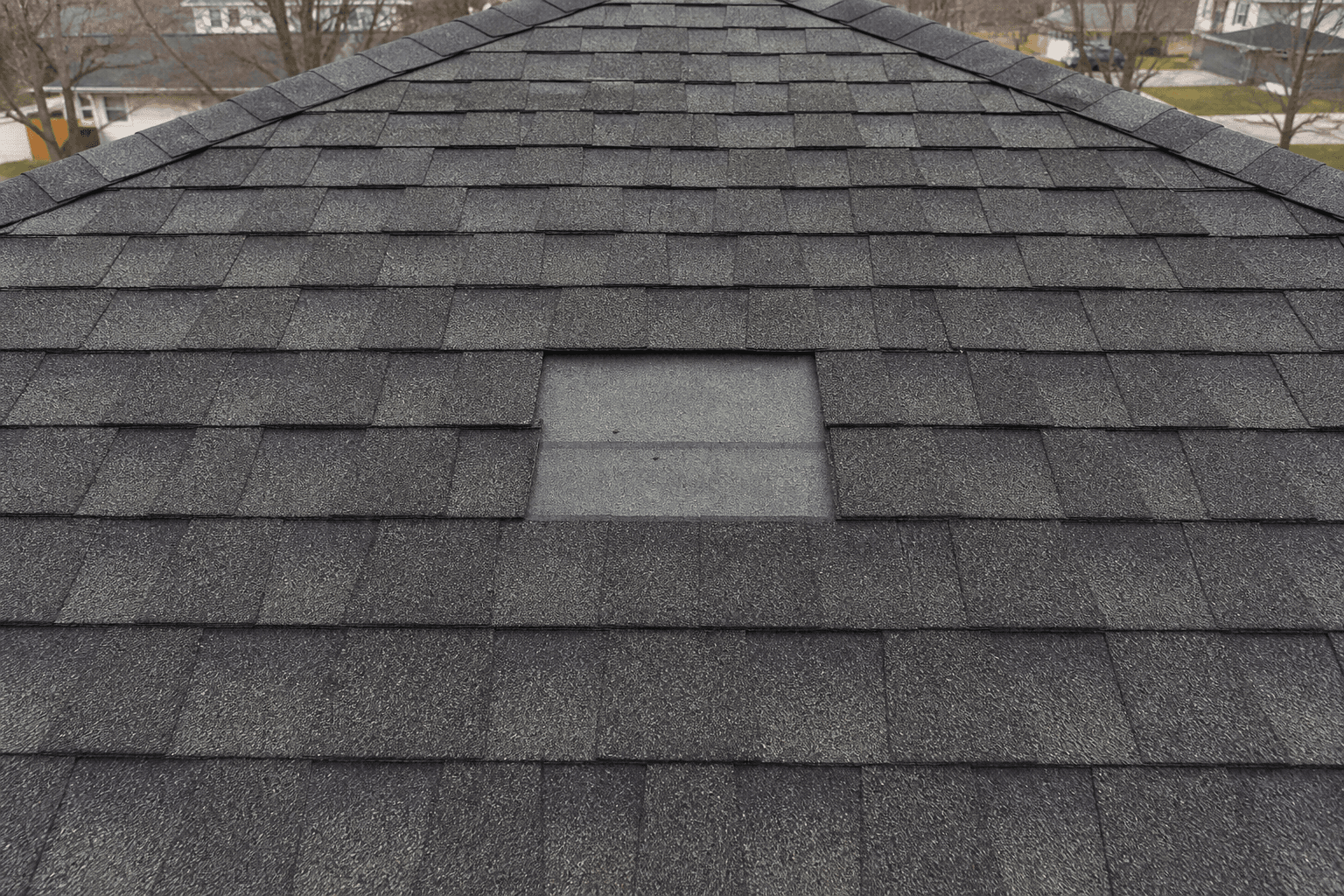
Charcoal architectural shingles with two tabs missing in the center, gray underlayment showing through the gap

What you are looking at

Two tabs are gone. Gray underlayment is showing through the hole. The rest of this slope still looks even.

What it usually means

Wind and age lift tabs. One opening lets water into the layer below. If the surrounding roof is still sound, this is often a targeted repair — after we confirm what is under the hole and whether nearby shingles are lifting too.

Photograph the gap from the ground if you can. Do not climb for it. Send the photo. We look at the rest of the slope before we call it a patch.
02 · Look first

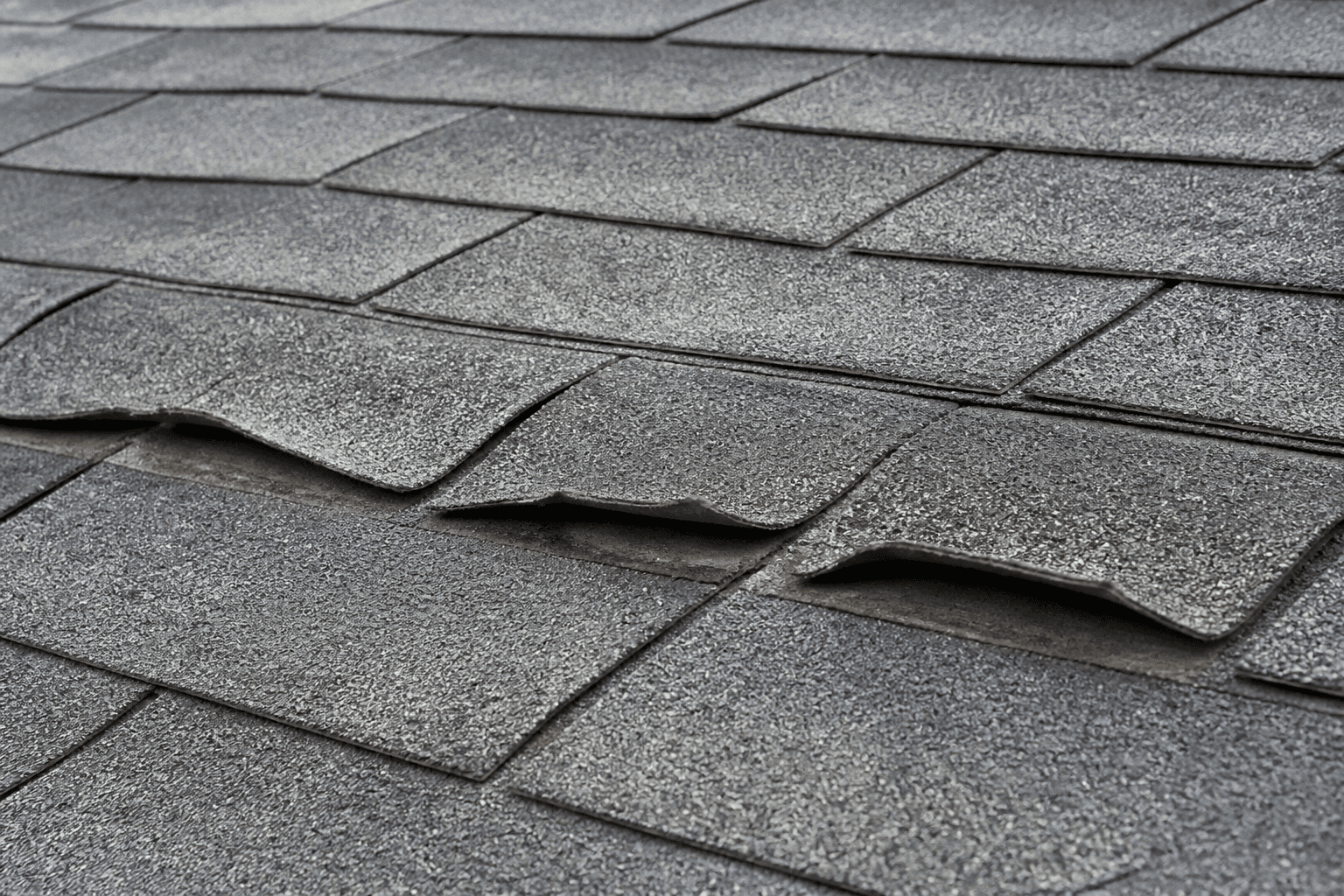
Curled shingles

Aged charcoal architectural shingles with tabs curled and cupped upward at the leading edge in the center of the frame

What you are looking at

The bottom edges of the tabs have cupped and curled up. You can see the underside of the shingle. Heat and age do this.

What it usually means

A few curled tabs on an otherwise even field can still be a repair. A slope of them is the shingle drying out. Curling is not a caulk job. If the rest of the roof looks the same, patching one corner does not stop the rest.

A close photo of the curl and a wide photo of the whole slope. Together they tell us if this is a corner or the whole roof.

03 · Needs a visit

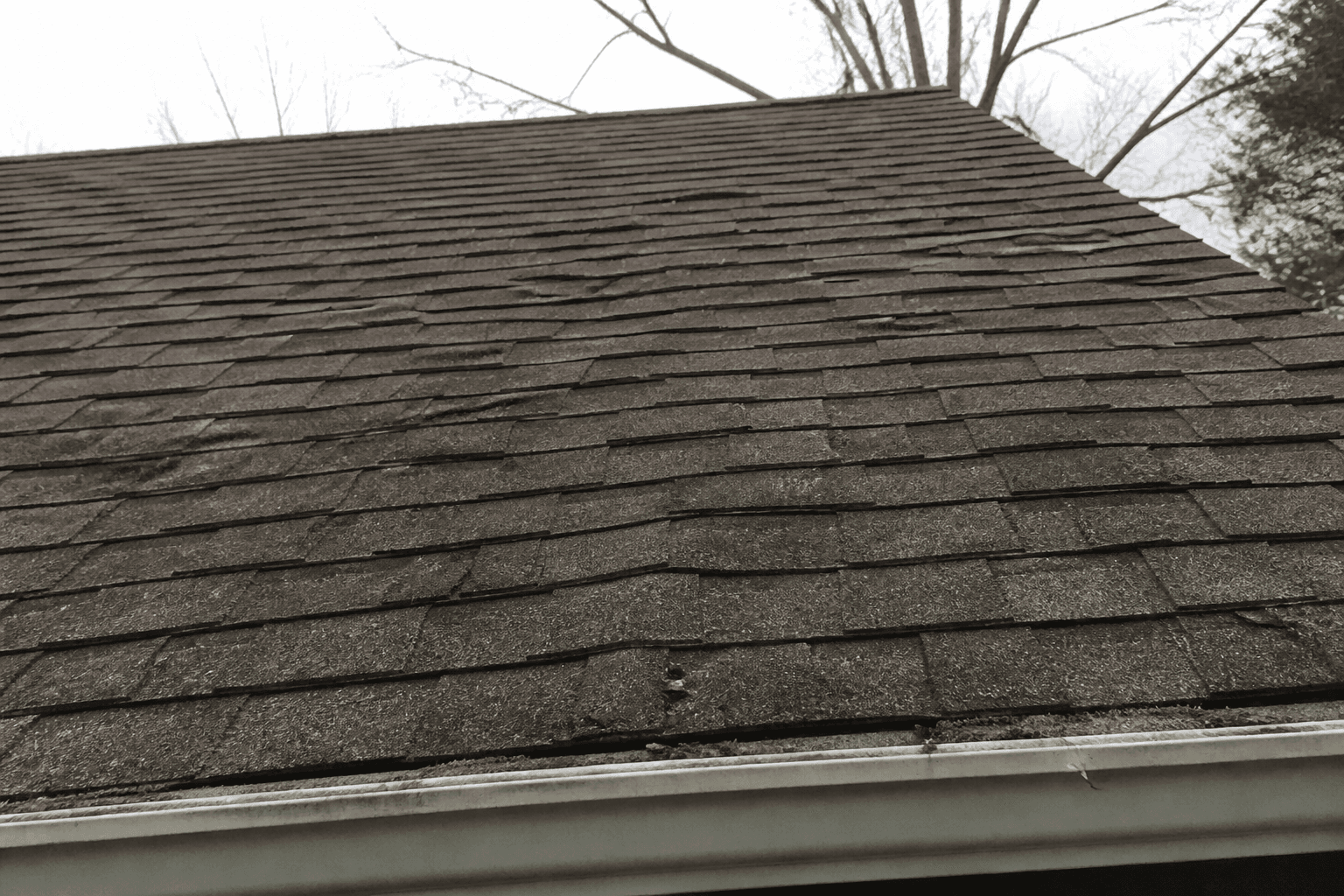
Buckled or wrinkled shingles

Weathered brown-gray shingle slope with wavy wrinkled courses, algae streaks, and a gutter at the eave

What you are looking at

The courses do not run straight. They wave and wrinkle across the field — like a blanket over an uneven deck. That is buckling, not a missing tab.

What it usually means

Buckling is often the deck moving, moisture under the shingles, an overlay, or heat with poor ventilation. It is not solved by nailing the wrinkle down. If it is one area, we still need to see why. If the whole slope is wrinkled, that is usually a replacement conversation.

Photograph the wrinkled patch and, if you can, the attic under that slope. Do not walk on buckled shingles to get the shot.

04 · Look first

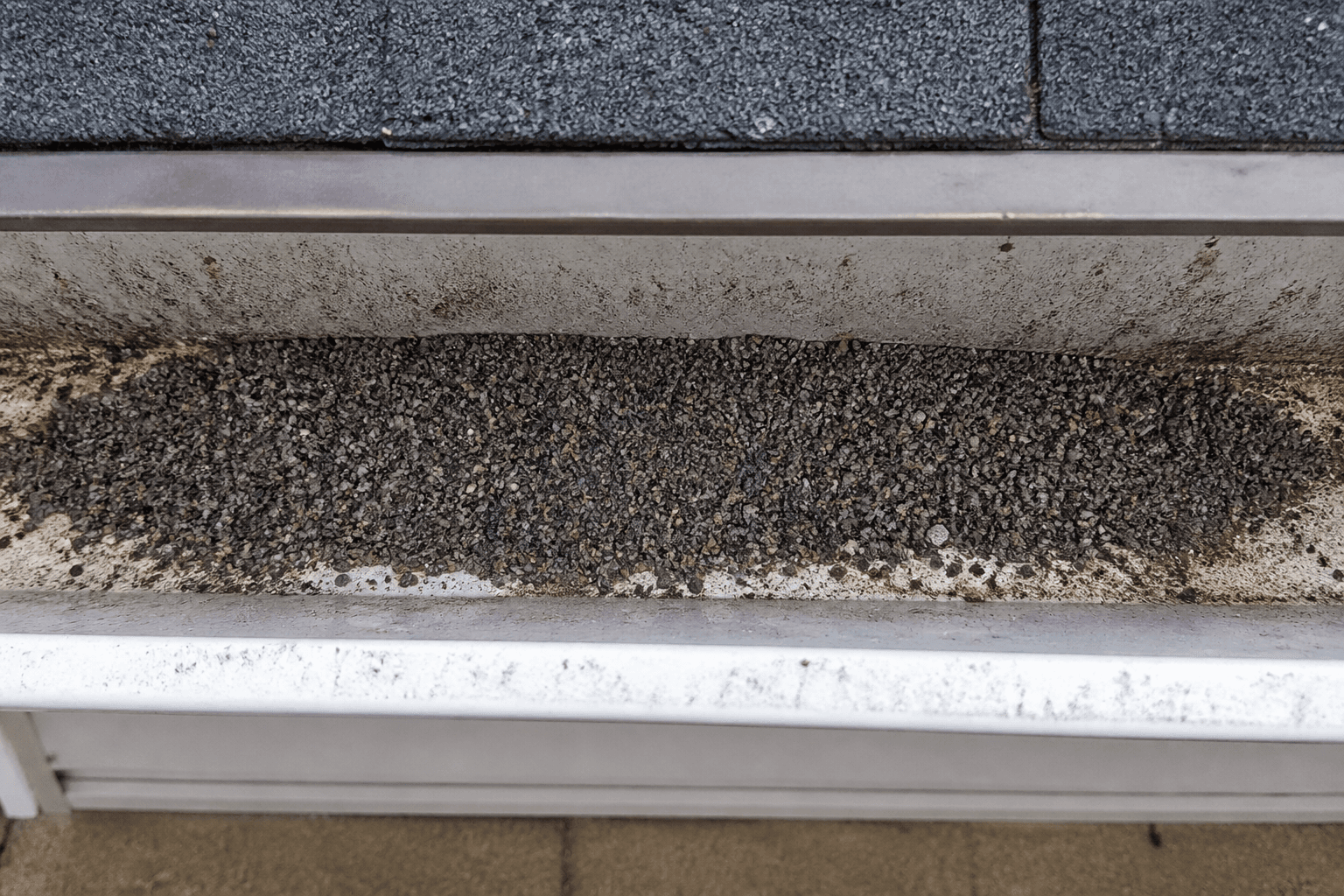
Granules in the gutter

White rain gutter filled with a pile of dark asphalt shingle granules, drip edge and shingles visible above

What you are looking at

Those granules are the ceramic coating that used to sit on the shingles. A little after a hard rain is common. A gutter this full is a reason to look — not a verdict by itself.

What it usually means

Asphalt shingles shed granules over the years. A visible amount deserves a walk of the field — bald spots, cupping, and how much of the roof looks like this. It does not, by itself, mean replace everything tomorrow.

Take a photo of the gutter and one of the slope above it. Together they tell us more than either one.

05 · Often a repair

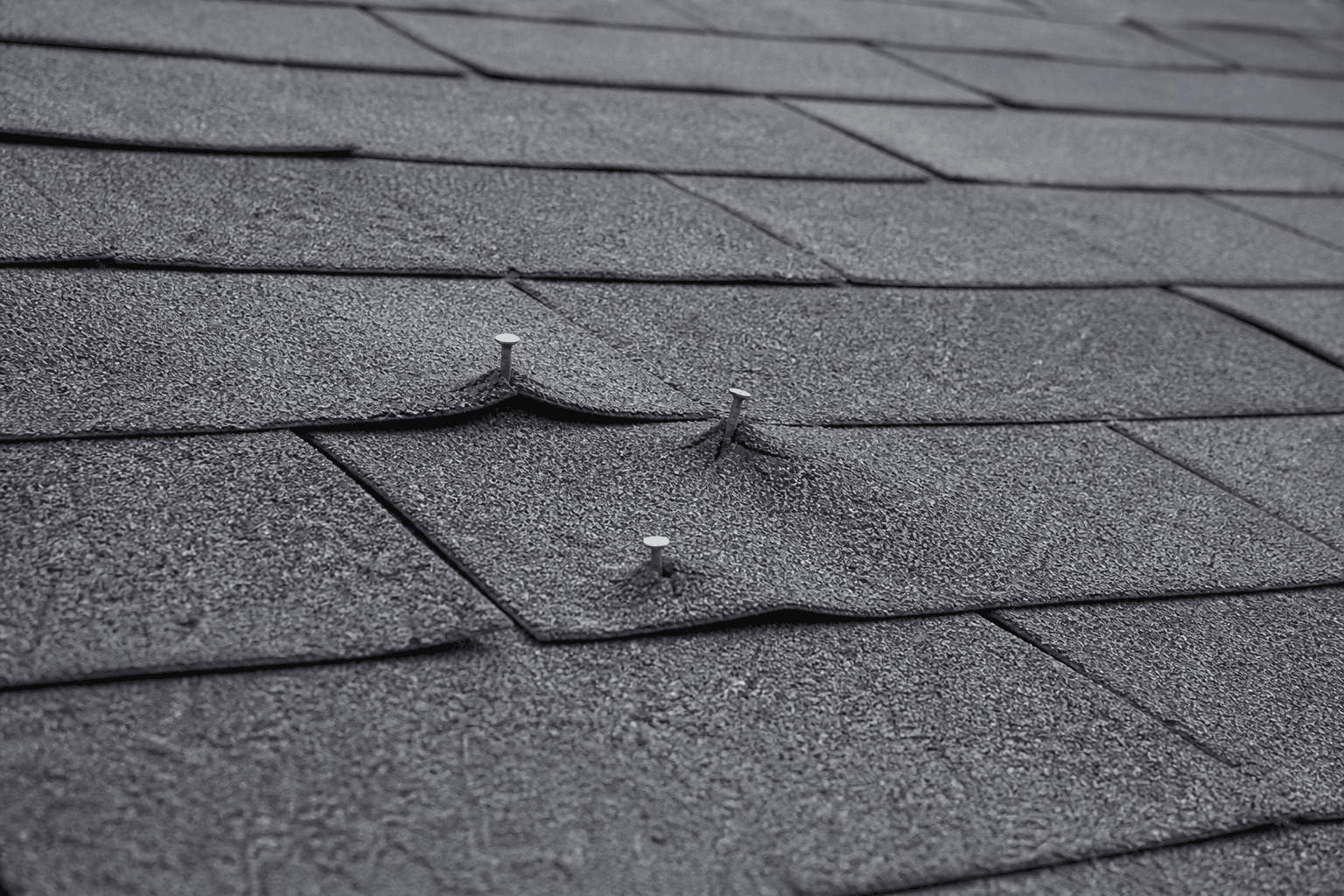
Nails popping through

Close-up of charcoal shingles with nail heads popped through the tabs in the center of the field

What you are looking at

Nail heads are sitting on top of the shingle instead of under the course above. You see a bump. Sometimes the metal is actually showing.

What it usually means

A nail that works back out leaves a hole and a lifted tab. A few pops on a sound roof are often a repair — set, seal, and cover. A pattern across the roof can mean the deck was moving, the nails were short, or the shingles are worn out. That is decided on the roof, not from one bump.

If you can see them from the ground, photograph the cluster. Count is more useful than a single close-up.

06 · Often a repair

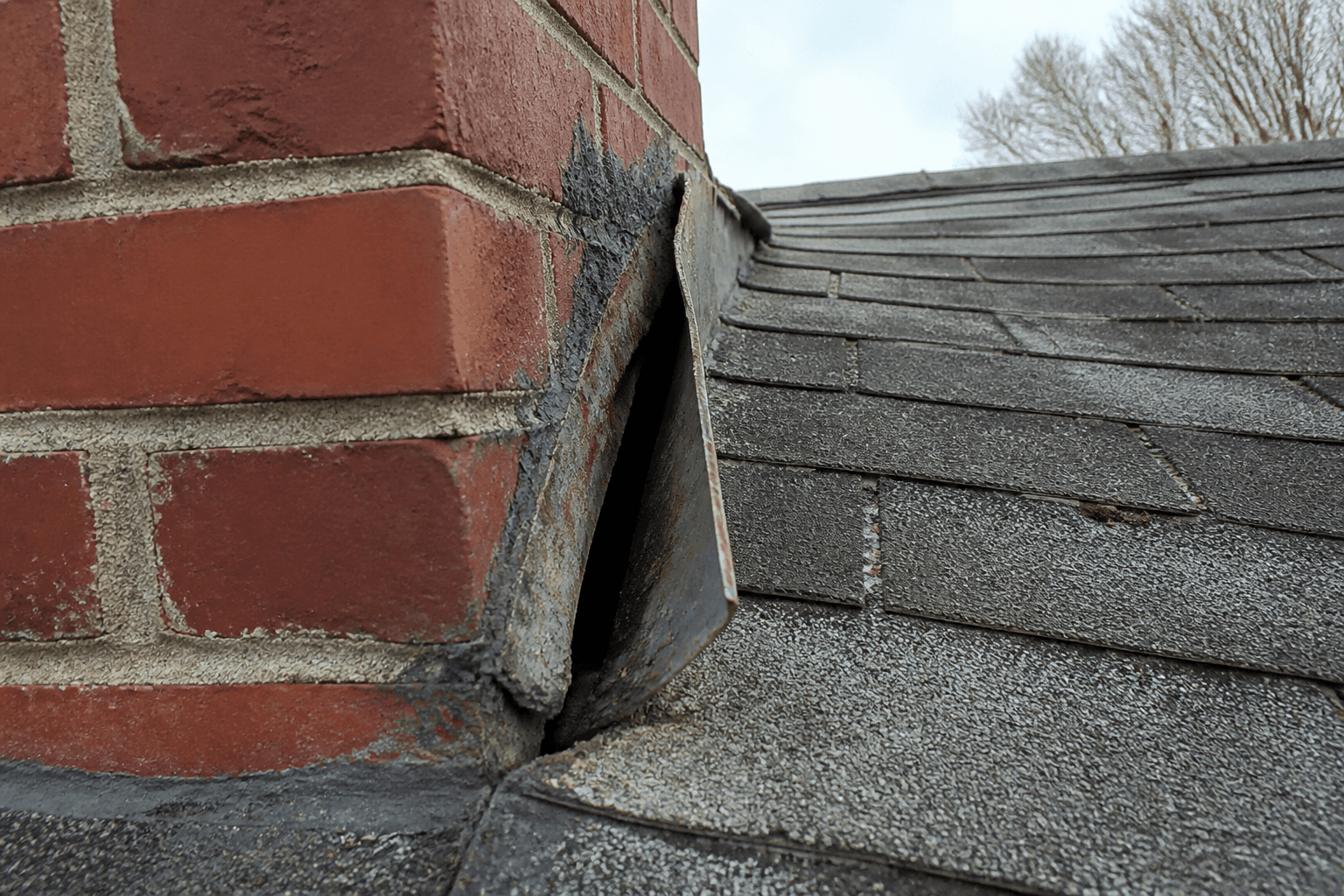
Failed flashing

Brick chimney on an aged shingle roof with lifted rusted step flashing and cracked sealant at the joint

What you are looking at

The metal at the chimney has lifted. The sealant is cracked. That gap is a typical leak path — not “a bad shingle in the middle.”

What it usually means

Most leaks start where the roof plane is interrupted: chimneys, walls, pipes, skylights. If the field is still even and the deck is firm, replacing the flashing detail can be the honest job. Repeated blobs of sealant on the same joint usually mean the detail was never solved.

If you have a ceiling stain, photograph it and the chimney or wall above it. We match the two on the visit.

07 · Often a repair

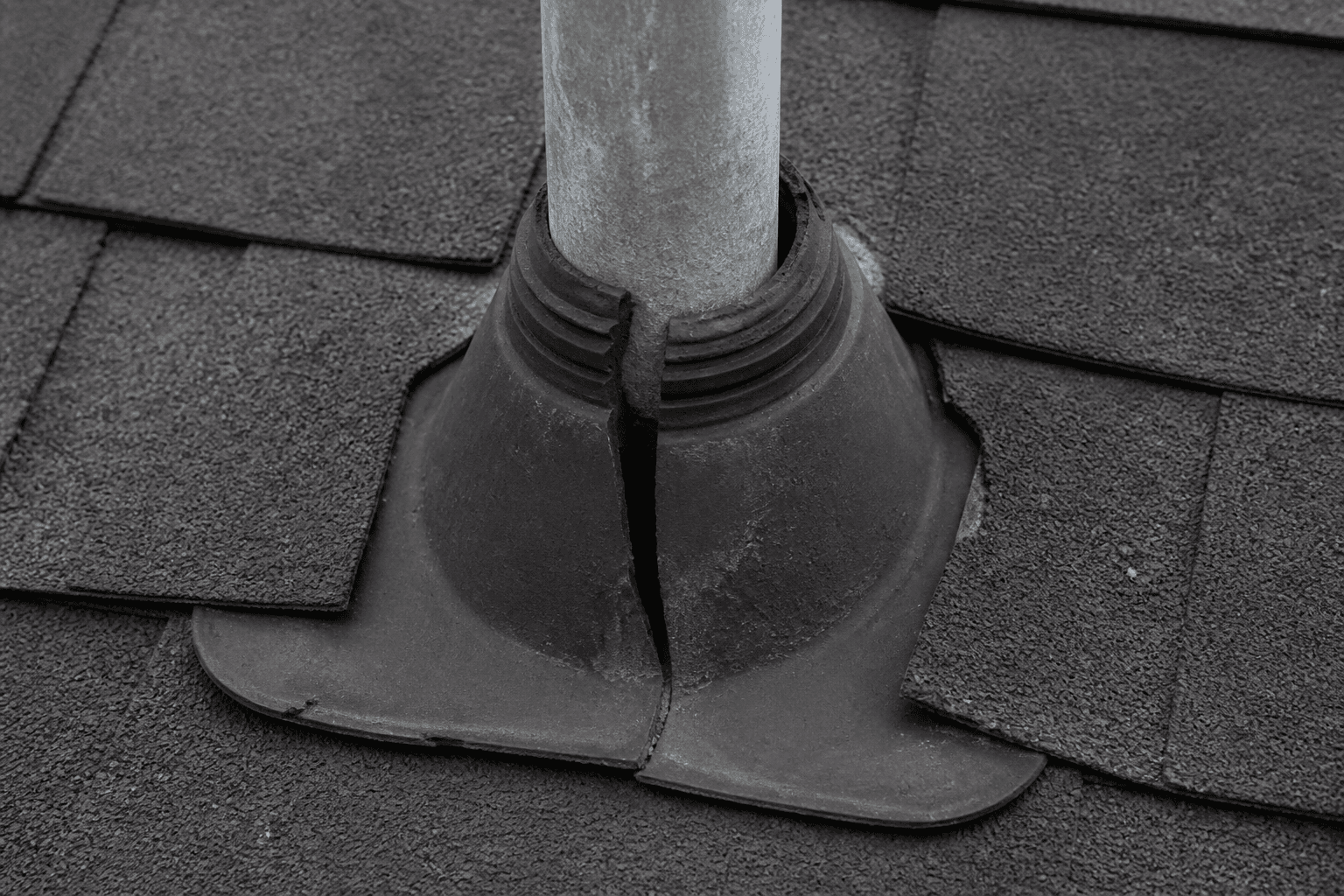
A cracked pipe boot

Plumbing vent on an asphalt roof with the black rubber boot cracked and split around the pipe

What you are looking at

The black collar around the vent pipe is split. Rubber dries, cracks, and opens a hole right against the pipe. Water follows the pipe down.

What it usually means

A failed boot is one of the most common leaks we see — and one of the most honest repairs, if the rest of the roof is sound. Caulk in the split is a delay, not a fix. The collar gets replaced. If every boot on the house is this far gone, we will say so.

From the ground you can often see the pipe. A photo of the collar is enough to start. We still confirm it on the roof.

08 · Look first

Moss on the roof

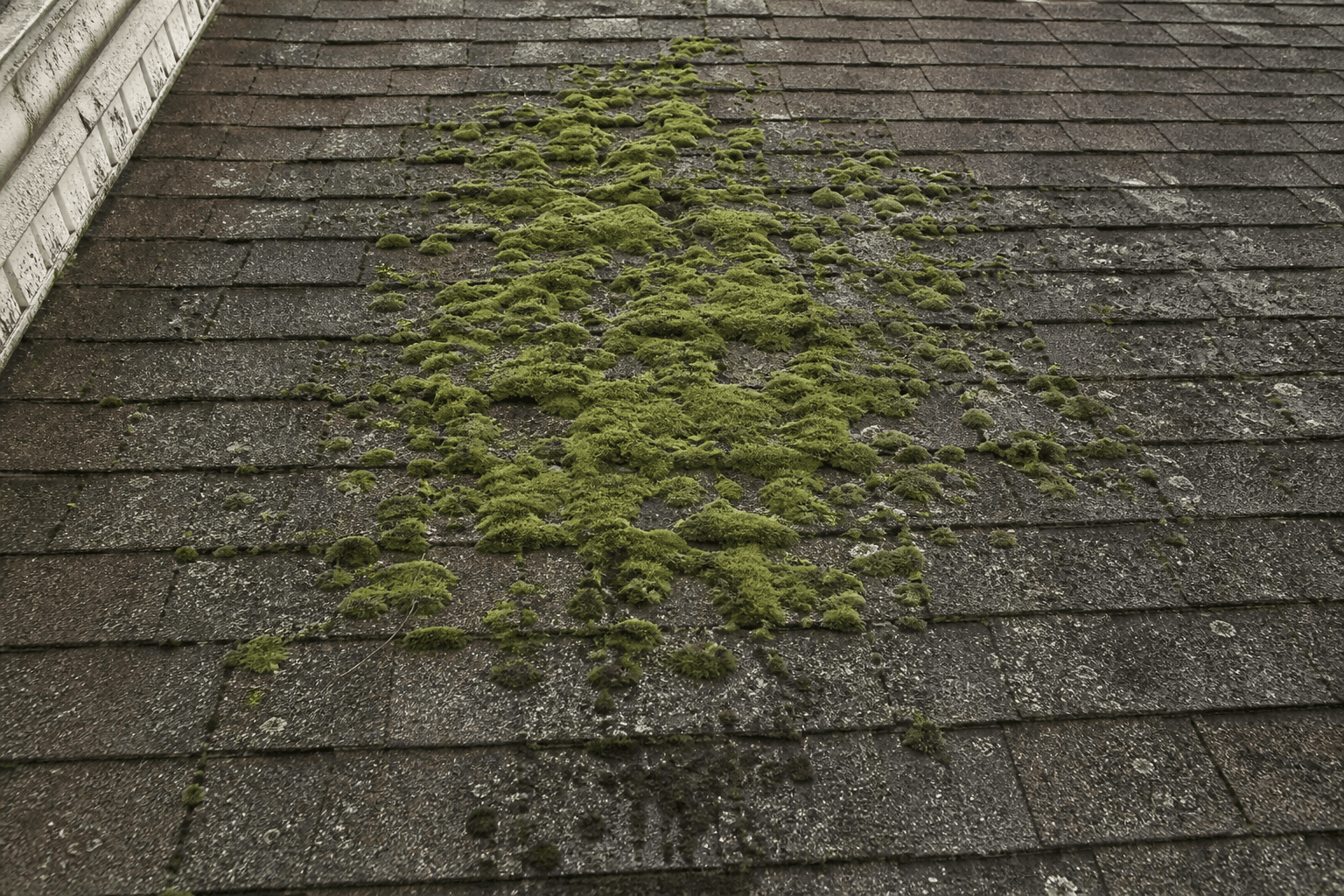
Shaded residential asphalt roof with a thick green moss patch growing in the center of the shingle field

What you are looking at

Moss sitting in the courses. It is not dirt. It holds water against the shingle. Dark streaks nearby are often algae — mostly cosmetic. Moss is not.

What it usually means

Shade and moisture grow it. Scraping it off with a shovel tears granules. A small patch on a sound field can be treated and watched. Moss across a tired roof does not make the case for a cleaning. It makes the case to look at the field underneath.

Photograph the moss and the rest of that slope. Do not power-wash it. That drives water under the tabs.

09 · Needs a visit

Ice dams

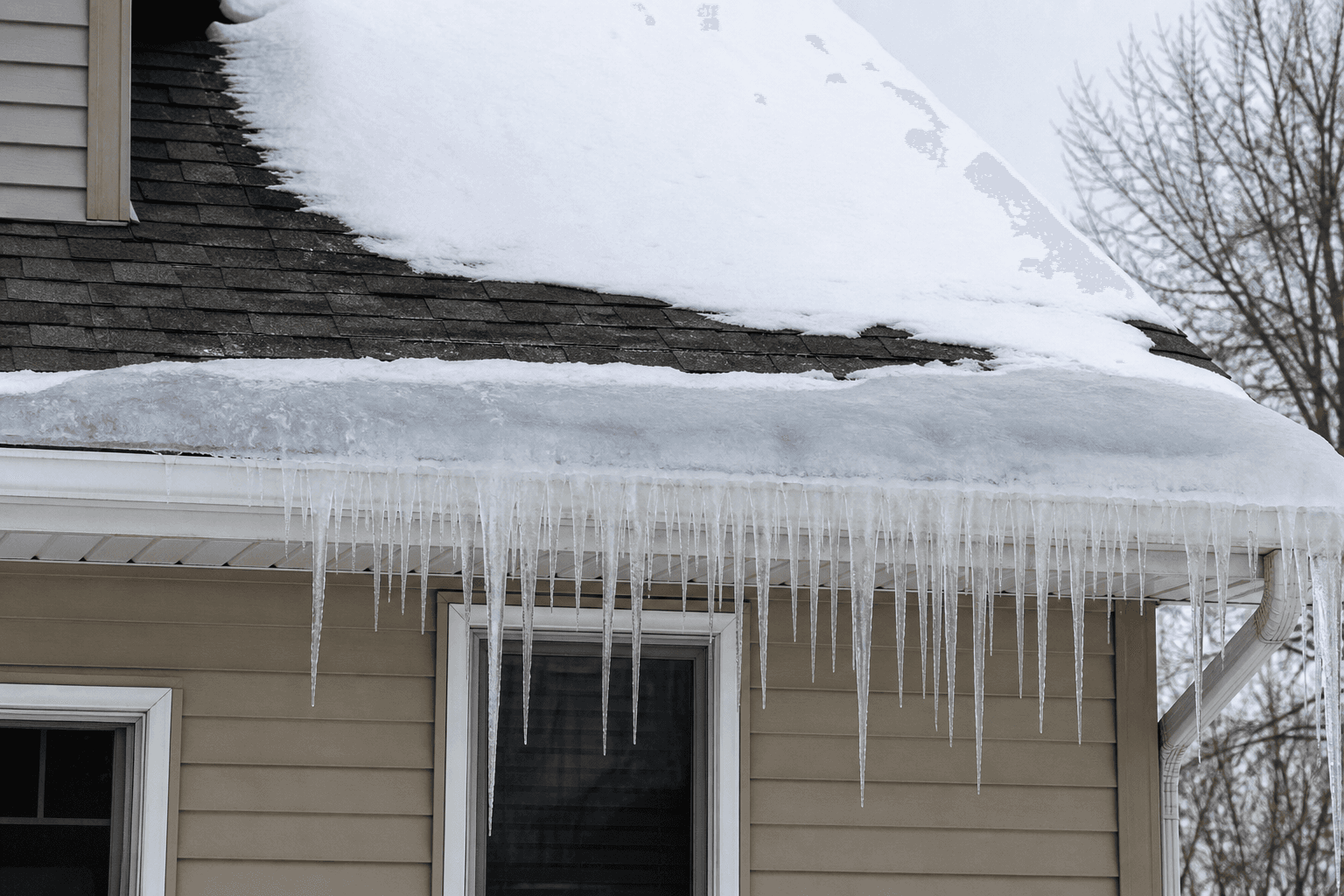
Winter eave on a Midwest house with a thick ice dam along the roof edge and icicles hanging from the gutter

What you are looking at

A ridge of ice at the eave. Icicles off the gutter. Snow still sitting upslope. Water melts, hits the cold edge, and freezes. Then it backs up under the shingles.

What it usually means

This is a Detroit-metro winter problem. The shingles may still be fine. The heat is often in the attic, and the backup is at the eave. The honest work can be ventilation, insulation, and ice-and-water at the drip — not automatically a new roof. A dam that has already leaked needs the deck checked.

A photo of the eave in winter helps. So does one of the ceiling below that wall. We look at both, then at the attic.

10 · Usually replace

Widespread wear

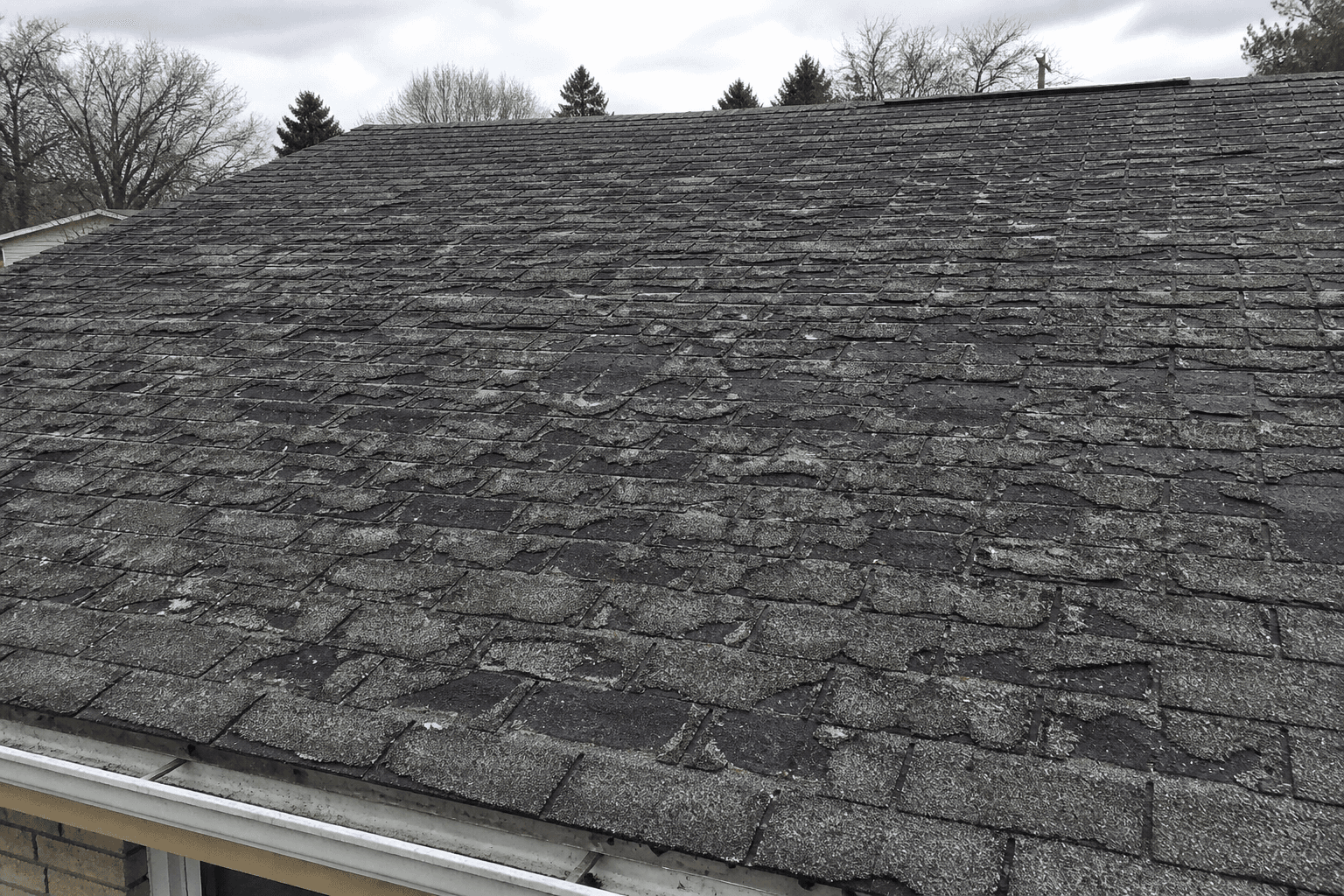
Entire residential roof slope of old bald asphalt shingles, cupped and cracked from eave to ridge

What you are looking at

The field is bald, cupped, and cracked from the eave toward the ridge. This is age across the slope, not storm damage in one corner.

What it usually means

When wear is the whole roof, patching becomes a cycle. New tabs on a brittle field do not match, do not last, and do not fix what is happening under them. That is usually a replacement conversation — after we see the deck and the attic.

A wide photo of the slope is more useful here than a close-up of one crack.

11 · Needs a visit

A stain on the ceiling

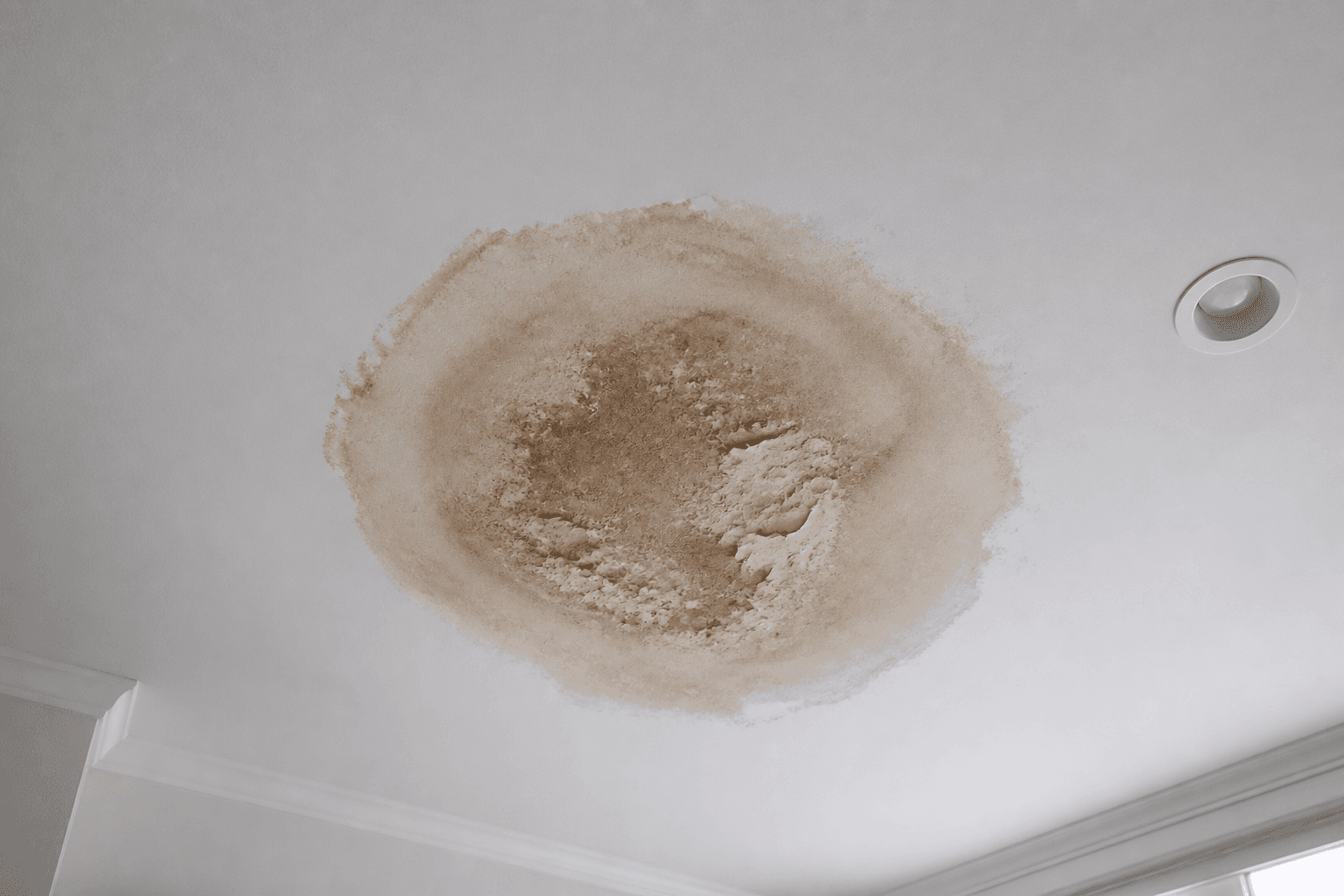
White drywall ceiling with a large brown water-stain ring and peeling paint in the center

What you are looking at

A brown ring, paint peeling at the middle. Water already made it inside. That does not, by itself, tell you whether the fix is a flashing repair or a new roof.

What it usually means

Interior stains are a location, not a diagnosis. The source is often a flashing joint above, an ice dam at the eave, or a penetration — sometimes a plumbing leak that is not the roof at all. Guessing from the living room is how houses get the wrong repair.

Photograph the stain and, if you can from the ground, the roof area above that room. Then we get on the roof.

12 · Usually replace

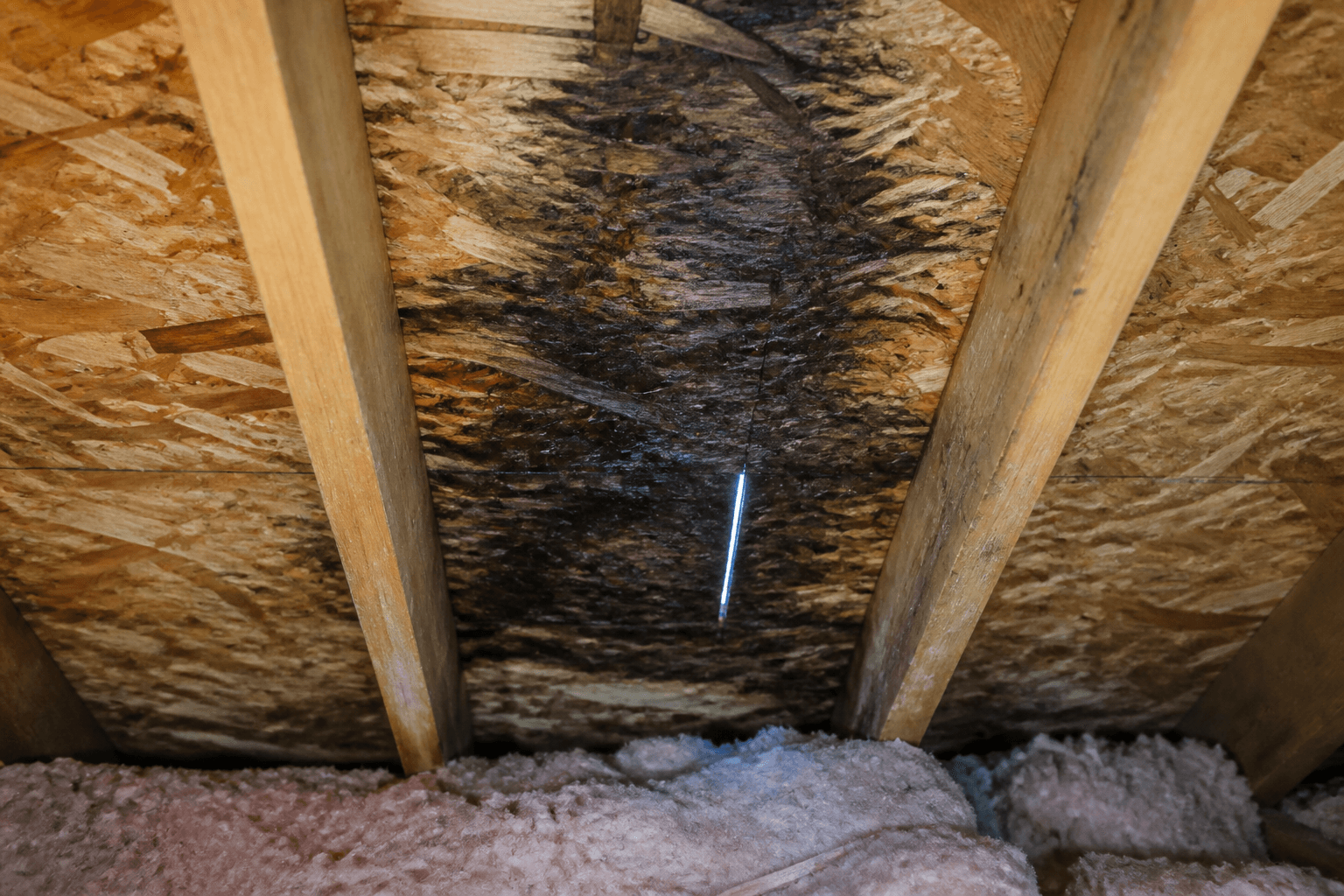
Stains in the attic

Attic underside of OSB roof deck between rafters, dark water staining and a slit of daylight through the wood

What you are looking at

The OSB is darkened. That is water on the wood, and a slit of daylight where there should not be one. A roof is also diagnosed from the attic.

What it usually means

Soft or stained sheathing is not a shingle problem you caulk from above. Damaged sheets come out. If the staining is widespread, or the deck bounces, the honest conversation is replacing the roof — not another patch on top of wet wood. We will not cover wood we already know is bad just to keep a price down.

If you have attic access, a photo looking up at the deck helps. If you do not, say so. We will look from the hatch on the visit.

Often a repair

A repair can be enough when

  • The damage is local — a few tabs, a split pipe boot, one flashing joint.
  • The rest of the field still looks even. Tabs are not bald or wrinkled across the slope.
  • The deck is firm. The attic wood is not stained in sheets.
  • It has not been “sealed” in the same spot twice already.

Usually replace

A replacement is usually needed when

  • Wear or buckling is the whole roof: cupping, bald tabs, wrinkles, cracking from eave to ridge.
  • There are several leaks, or one leak that keeps coming back.
  • The deck is soft, stained, or daylight shows from the attic.
  • You are paying for a third patch on a roof that is already tired.

Educational examples — not photos of your house, and not an ALVTA job gallery. A photo you send helps. Standing on the roof is how we decide.

Not sure what you are looking at?

Send photos of what you see. We will visit, then tell you whether it looks like a repair, a replacement, or something that can wait.